
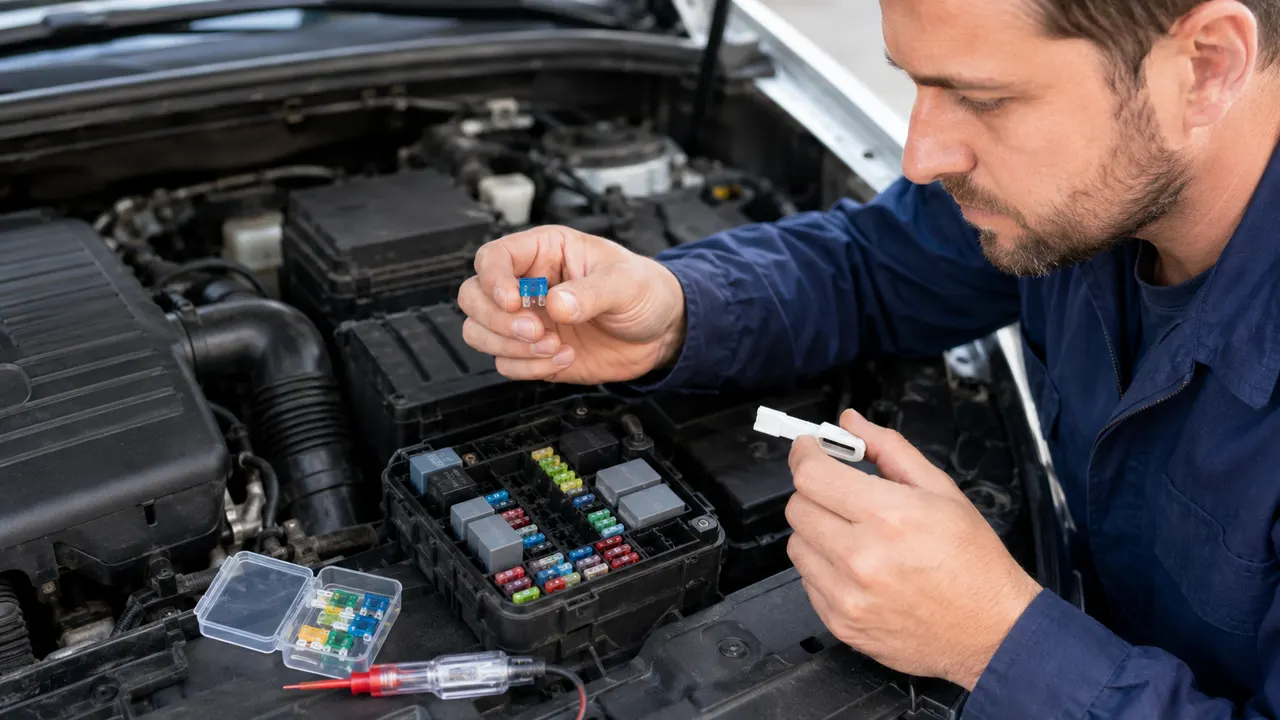
A blown fuse is one of the most common causes of automotive electrical failure. If your power outlet, headlights, interior lights, radio, dash cam, or trailer lights stop working, checking the fuse box should be one of the first diagnostic steps.
Common Signs of a Blown Fuse
A blown fuse may cause:
- Accessory power failure
- One light not working
- Radio or USB port failure
- Dash cam power loss
- Power window malfunction
- Trailer light failure
- Interior lamp failure
Step 1: Locate the Fuse Box
Most vehicles have more than one fuse box. Common locations include:
- Under the dashboard
- Inside the glove box area
- Under the hood
- Side panel near the driver seat
Check the vehicle manual or fuse box cover for the fuse layout.
Step 2: Identify the Suspected Fuse
Use the fuse diagram to find the circuit related to the failed component. For example, check the "CIG," "ACC," "RADIO," "LIGHT," or "TAIL" fuse depending on the problem.
Step 3: Test the Fuse with a Circuit Tester
Connect the circuit tester ground clip to a good chassis ground. Turn the ignition on if the circuit requires ACC power.
Touch both test points on top of the fuse.
- Power on both sides: the fuse is likely good
- Power on one side only: the fuse is likely blown
- No power on either side: the circuit may not be active or may have another issue
Step 4: Replace with the Same Amp Rating
If the fuse is blown, replace it with the same amperage rating. Never install a higher-amp fuse to solve the problem. This may damage wiring or create a fire risk.
Step 5: Check for Repeated Fuse Failure
If the new fuse blows again, there may be a short circuit, damaged wire, faulty accessory, or incorrect installation.
Conclusion
Finding a blown fuse is simple with the right tool. A digital circuit tester allows fast diagnosis without removing every fuse.
AutoVoltCore supplies automotive fuse kits, fuse taps, circuit testers, and repair accessories for workshops, distributors, and private-label automotive tool brands.